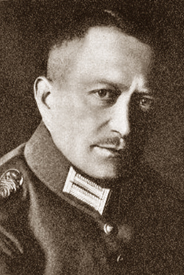
| |
|
| 22.03.1893 |
Sekonde-Lieutenant |
| 22.03.1893 |
2.
Hessisches
Infanterie-Regiment Nr. 82 - Göttingen |
|
01.06.1896 |
Hannoversches
Pionier-Bataillon Nr. 10 - Minden (detached
from 2IR-82) |
|
01.07.1896 |
2.
Hessisches
Infanterie-Regiment Nr. 82 - Göttingen |
|
22.03.1897 |
Königlich Preußische
Kaiser Wilhelm-Erinnerungs-Medaille (Zentenarmedaille) |
| 01.10.1897 |
2.
Hessisches
Infanterie-Regiment Nr. 82 - Göttingen (Bn
Adjutant) |
|
01.01.1899 |
Sekonde-Lieutenant
= Leutnant |
| 01.10.1900 |
Preußische Kriegsakademie
- Berlin (Student at Royal
Prussian War College) |
|
27.01.1902 |
2. Kurhessisches
Infanterie-Regiment Nr. 82 - Göttingen
(modified Rgt designation while at War College) |
| 22.04.1902 |
Oberleutnant |
| 21.07.1903 |
2. Kurhessisches
Infanterie-Regiment Nr. 82 - Göttingen
(return from War College) |
| 01.04.1904 |
Großer Generalstab
- Berlin (detached to
Prussian Great General Staff HQ) |
|
27.02.1906 |
Königlich Preußisches
Erinnerungszeichen zur Silbernen Hochzeit 1906 |
|
22.03.1906 |
Hauptmann
(Patent ante-dated from 11.09.1907) |
| 01.07.1906 |
I.
Armee-Korps - Königsberg (detached
to Frh von der Goltz's General Staff) |
| 22.03.1910 |
3.
Thüringisches Infanterie-Regiment Nr. 71 - Erfurt (Coy Cdr) |
| 20.07.1912 |
Generalstab der Armee -
Berlin (assigned to General
Staff of the Army) |
| 20.07.1912 |
Großer Generalstab -
Berlin
(detailed to Great General Staff, IIIb Military Intel Section) |
| 01.10.1912 |
Major |
|
15.06.1913 |
25-jährigen
Regierungs-Jubiläum Wilhelm II. |
| |
|
| Great
War |
| |
|
| 02.08.1914 |
das Große Hauptquartier, Chef der
Sektion IIIb Nachrichtendienst - Berlin
(Chief of Mil Intel Branch,
deployed with OHL Great HQ) |
|
17.08.1914 |
das Große Hauptquartier, Chef der
Sektion IIIb Nachrichtendienst - Koblenz
(Chief of Mil Intel Branch, Great HQ
relocated) |
|
30.08.1914 |
das Große Hauptquartier, Chef der
Sektion IIIb Nachrichtendienst - Luxembourg
(Chief of Mil Intel Branch, Great HQ
relocated) |
|
25.09.1914 |
das Große Hauptquartier, Chef der
Sektion IIIb Nachrichtendienst - Charleville Fr
(Chief
of Mil Intel Branch, Great HQ relocated) |
| 00.11.1914 |
das Königlich Preußische
Eiserne Kreuz 1914 - 2. Klasse |
| 00.00.1914 |
das Königlich Preußische
Eiserne Kreuz 1914 - 1. Klasse |
|
23.03.1915 |
Kaiserlich Königlich
Österreichisches Militär-Verdienstkreuz - 3. Klasse mit Kriegsdekoration |
|
00.06.1915 |
das Große Hauptquartier, Chef der
Abteilung IIIb Nachrichtendienst -
Charleville Fr
(Mil
Intel Branch upgraded to Department) |
|
20.09.1916 |
das Große Hauptquartier, Chef der
Abteilung IIIb Nachrichtendienst - Schloß Pleß
(Chief
of Mil Intel Branch, Great HQ relocated) |
|
14.10.1916 |
Königlich Haus-Orden von
Hohenzollern - Ritterkreuz mit Schwertern |
|
17.02.1917 |
das Große Hauptquartier, Chef der
Abteilung IIIb Nachrichtendienst - Bad Kreuznach
(Chief
of Mil Intel Branch, Great HQ relocated) |
| 27.01.1918 |
Oberstleutnant |
|
08.03.1918 |
das Große Hauptquartier, Chef der
Abteilung IIIb Nachrichtendienst - Spa Belgium
(Chief
of Mil Intel Branch, Great HQ relocated) |
|
22.03.1918 |
Königlich Preußischer
Dienstauszeichnungskreuz für Offiziere - 25-jähriger |
|
02.08.1918 |
Königlich Schwedischer
Schwert-Orden - Kommandeur 2. Klasse |
|
11.11.1918 |
Waffenstillstand von Compiègne
(Armistice) |
| |
|
| |
|
| |
|
06.05.1914
|
| |
|
|
| |
|
*
* *
|
| |